
The kind of AI and data work we take on
AI features inside products that already ship
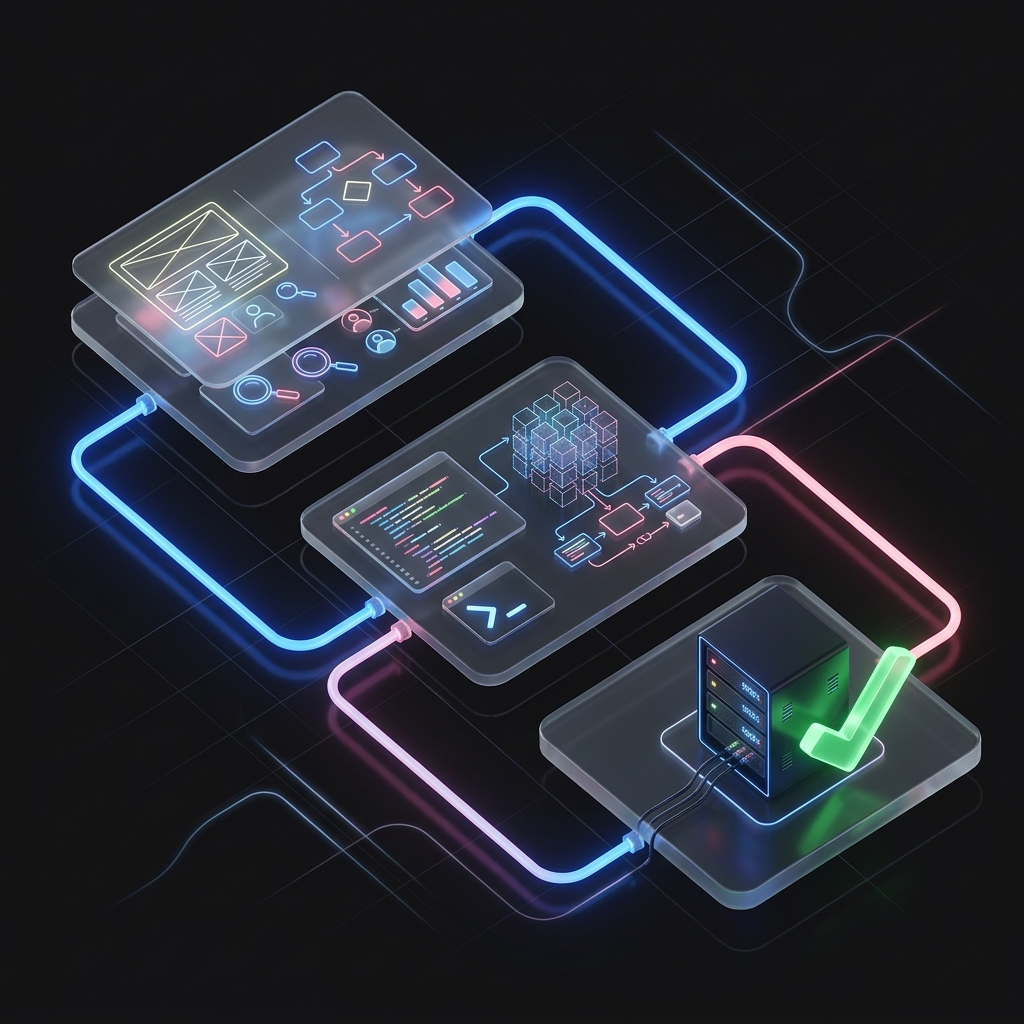
One production AI feature — search, support, classification, generation, or whatever the product actually needs — built with evals, observability, and a fallback path from day one. Six-week typical engagement, fixed price. Includes a written 'kill it or keep it' recommendation at the end, with the evidence you'd need to defend either choice to your board.
Data foundations that make AI possible
If your AI feature is going to live, the data layer has to be honest. We build the pipelines, schemas, and observability that turn the data you already have into something a model can actually learn from. Retrieval, structured extraction, evaluation harnesses — built so your team can keep running them after we leave.
AI roadmaps that survive a board meeting
A written, prioritised list of the AI features worth building, the ones that should wait, and the ones that shouldn't be built at all — with the cost, risk, and engineering shape of each. Usually two-to-four weeks. Built for CTOs, COOs, and CIOs who need a defensible answer to 'where's our AI strategy?' that isn't just hype.
AI features inside products that already ship
One production AI feature — search, support, classification, generation, or whatever the product actually needs — built with evals, observability, and a fallback path from day one. Six-week typical engagement, fixed price. Includes a written 'kill it or keep it' recommendation at the end, with the evidence you'd need to defend either choice to your board.
Data foundations that make AI possible
If your AI feature is going to live, the data layer has to be honest. We build the pipelines, schemas, and observability that turn the data you already have into something a model can actually learn from. Retrieval, structured extraction, evaluation harnesses — built so your team can keep running them after we leave.
AI roadmaps that survive a board meeting
A written, prioritised list of the AI features worth building, the ones that should wait, and the ones that shouldn't be built at all — with the cost, risk, and engineering shape of each. Usually two-to-four weeks. Built for CTOs, COOs, and CIOs who need a defensible answer to 'where's our AI strategy?' that isn't just hype.
How our AI work is different
We say no a lot
About one in three AI features we evaluate, we recommend killing — before the build budget is spent, not after.
We'd rather lose the build than ship a feature that gets quietly turned off in three months. That's what 'production-grade' actually requires.
We say no a lot
Evals before features
Before we build, we agree on how we'll know it's working.
Eval sets, accuracy thresholds, latency budgets, failure modes — written down, owned by you, run on every change. No 'looks good in the demo, broken in production' surprises.
Evals before features
Fallbacks, not faith
Every AI feature ships with a deterministic fallback path and clear observability for when the model is wrong.
The point of production AI is that the rest of the product keeps working when the AI doesn't. Most teams skip this; we make it the default.
Fallbacks, not faith
Built so your team can keep running it
We hand over runbooks, prompts, eval pipelines, and the cost model.
Your team can change a prompt, add an eval, or swap a model without calling us. Lock-in is bad engineering — and we're not in the business of selling it.
Built so your team can keep running it
We say no a lot
About one in three AI features we evaluate, we recommend killing — before the build budget is spent, not after.
We'd rather lose the build than ship a feature that gets quietly turned off in three months. That's what 'production-grade' actually requires.
We say no a lot
Evals before features
Before we build, we agree on how we'll know it's working.
Eval sets, accuracy thresholds, latency budgets, failure modes — written down, owned by you, run on every change. No 'looks good in the demo, broken in production' surprises.
Evals before features
Fallbacks, not faith
Every AI feature ships with a deterministic fallback path and clear observability for when the model is wrong.
The point of production AI is that the rest of the product keeps working when the AI doesn't. Most teams skip this; we make it the default.
Fallbacks, not faith
Built so your team can keep running it
We hand over runbooks, prompts, eval pipelines, and the cost model.
Your team can change a prompt, add an eval, or swap a model without calling us. Lock-in is bad engineering — and we're not in the business of selling it.
Built so your team can keep running it
How we work on AI
Questions a CTO usually asks
Bring us the AI feature you're not sure about.
Not the one that's already in the press release. The one where you're not sure if it should be built, or whether it'll survive contact with real users. We'll leave you with a one-page memo on whether to ship it, kill it, or keep evaluating.